






Convectors · Kampmann
Hydronic heat tailored to the interior.
Kampmann convectors offer hydronic heating for perimeter and architectural applications. The appropriate heat exchanger, casing and installation arrangement are selected according to the project.
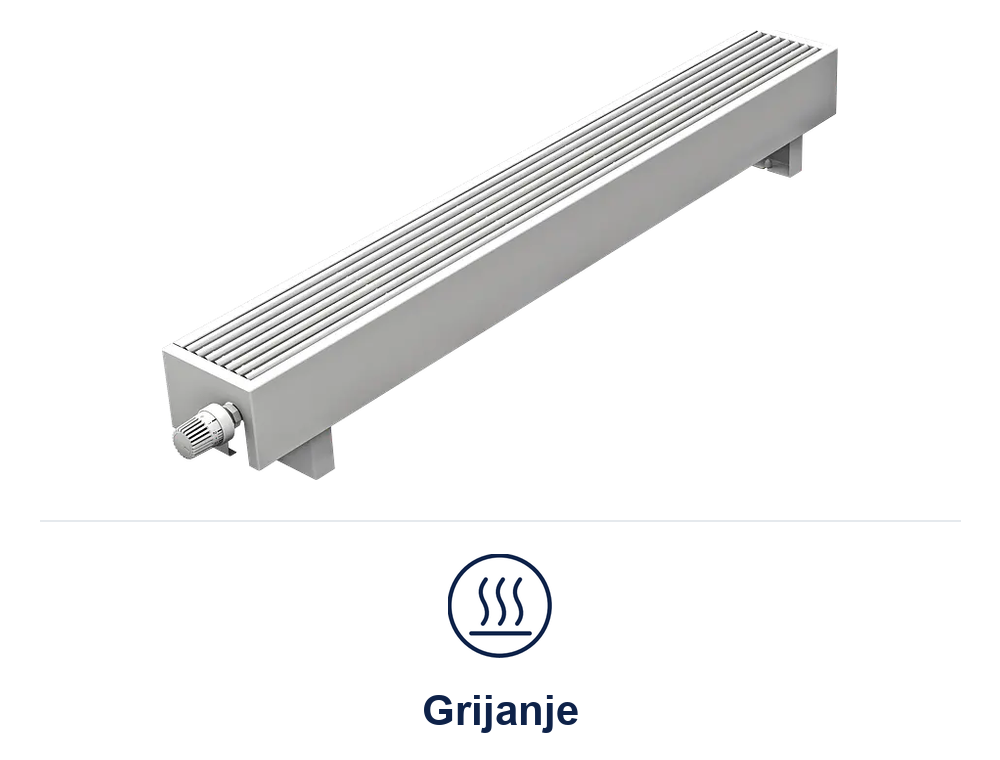
Designed around your project
- Match the required heat output to the available installation space and system water temperatures.
- Check air inlet and outlet areas, particularly where the convector is integrated into joinery or a custom casing.
- Allow access to valves and the heat exchanger for inspection and cleaning.
What matters when selecting the unit?
A convector is part of a complete heating solution. Casing geometry and restricted air flow can reduce performance; confirm the assembled arrangement before ordering.
Product selection with TDC
Send us the room layout, required heating or cooling duty, system temperatures, available installation space and controls requirements. We will help select the equipment and suitable accessories.
Request a quotation Current manufacturer data →
Kampmann documentation and downloads
Dimensions and available versions
Dimensions, heat exchanger arrangement and casing details are project-specific. Check the available perimeter space and the complete assembly drawing.
Technical details
Hydronic convectors transfer heat from the water circuit to room air. Heat output depends on the selected construction, operating temperatures and unobstructed air flow through the complete casing or joinery.
Installation and project planning
Coordinate floor or wall support, pipe connections, thermostatic equipment and access for cleaning. A custom enclosure must provide sufficient inlet and discharge area.
Benefits
Kampmann convectors offer hydronic heating for perimeter and architectural applications. The appropriate heat exchanger, casing and installation arrangement are selected according to the project.
Match the required heat output to the available installation space and system water temperatures. Check air inlet and outlet areas, particularly where the convector is integrated into joinery or a custom casing. Allow access to valves and the heat exchanger for inspection and cleaning.
Hydronic convectors transfer heat from the water circuit to room air. Heat output depends on the selected construction, operating temperatures and unobstructed air flow through the complete casing or joinery.
Coordinate floor or wall support, pipe connections, thermostatic equipment and access for cleaning. A custom enclosure must provide sufficient inlet and discharge area.
Dimensions, heat exchanger arrangement and casing details are project-specific. Check the available perimeter space and the complete assembly drawing. A convector is part of a complete heating solution. Casing geometry and restricted air flow can reduce performance; confirm the assembled arrangement before ordering.
Yes, steel convectors are also a practical solution for use with low water temperatures. The high output emitted by the convectors is achieved thanks to the elliptical cross-section of the water-bearing pipes and the larger free area. This ensures that the air resistance at the fins is less than would be the case with a higher heat output.
The benefits of steel convectors include the following:
- Long service life, robust design and versatility
- Troublefree mechanical cleaning using high-pressure cleaners or pressurised air
- Galvanised finish provides optimum protection against corrosion
Yes, steel convectors are ideal for both methods of installation. Kampmann steel convectors can be advantageously installed in any interior architectural style and are therefore also ideal for the refurbishment of old buildings in accordance with the state of the art.